Showing posts with label cancer. Show all posts

Friday, April 11, 2008

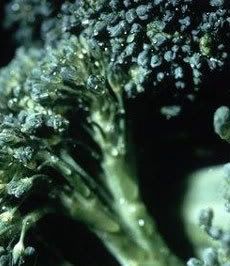
Broccoli: The Nutritious Warrior


Many nutritionists have dubbed broccoli a "SuperFood" - and with good reason. This tasty, versatile and nutrient-packed member of the cabbage family packs a strong anti-oxidant punch that can help fight many types of cancer, while also providing a hefty dose of calcium for strong bones and folic acid to prevent birth defects.
Broccoli contains the phytonutrients sulforaphane and indoles, which have been shown to effectively fight many types of cancer. Indole-3-carbinol has been found to deactivate an estrogen metabolite that promotes tumor cell growth, while increasing levels of a cancer protective form of estrogen called 2-hydroxyestrone. It also inhibits the movement of cancerous cells through the body.
Sulforaphane boosts detoxification enzymes to clear potentially carcinogenic substances from the body more quickly, while halting cell growth and increasing the self-destruct mechanism in abnormal cells. New research has shown that this phytonutrient can help repair sun damaged skin as well.
When broccoli is cut, chewed or digested, it releases glucose along with compounds that help to break down food, including isothiocyanates, which stimulate enzymes in the liver that detoxify carcinogens. One form of isothiocyanates, known as allyl isothicyanate, inhibits cell division while encouraging the self-destruct function in abnormal cells. These characteristics make regular consumption of broccoli a tasty way to reduce your risk of many types of cancer, including breast, prostate, colorectal and lung.
Broccoli is especially good to consume during pregnancy. It is packed with nutrients and an excellent source of calcium (74 mg per cup), vitamins C (124 mg per cup) K, and A, folate (94 mcg per cup) and fiber. The high calcium content helps to build and maintain healthy bones for your baby and you, while the folic acid helps prevent spina bifida and other birth defects, and the fiber content helps relieve constipation. Broccoli's high beta-carotene content helps fortify your immune system and promotes clear skin. Broccoli is also a good source of phosphorus, magnesium, potassium, and vitamins E and B6.
It is estimated that about 50 percent of Americans are infected with a bacterium known as H. pylori, which can cause ulcers and damage DNA. Eating broccoli sprouts has been found to suppress this potentially deadly bacterium and relieve the gastritis associated with it. Broccoli sprouts also provide 10-100 times the sulfur-containing phytonutrients as mature broccoli to detoxify carcinogens and boost enzymes.

Friday, February 15, 2008

Apples


You've probably heard the old saying "an apple a day, keeps the doctor away," and may have dismissed it as another archaic old wives' tale. But as scientists are discovering, there may be some truth to it! This popular member of the rose family may help fight cancer and heart disease; protect against sunburn, asthma, and diabetes; and relieve constipation. And a recent study found that eating apples during pregnancy can protect your unborn baby from developing asthma and other lung problems later on in life.
Apples' antioxidant flavonoids may help prevent certain types of cancer. When scientists at University of California at Davis added apple extracts to cultures of human endothelial cells (the cells that line our arteries and are the first defense against cancer), the human cells were protected against the effects of tumor necrosis factor (TNF), a compound that triggers cell death and promotes inflammation. The apple extracts actually blocked the signals sent from the tumor that kill cells. The high antioxidant content in apples also helps to eliminate free radicals from the body.
The phenols found in apples may also provide UV-B protection. Studies found that Braeburn apples in particular help protect the skin from sun damage. So eating an apple before going to the beach might be a good way to reduce the risk of sunburn.
Recent studies have discovered apples may have a beneficial affect on lung function in adults and fetuses. One study found that men who ate apples had a lung capacity 138 milliliters greater than those who did not. While another study found that mothers who consumed apples during their pregnancy were less likely to have children who suffer from asthma and wheezing. Scientists believe that the high levels of antioxidants and anti-inflammatory flavonoids, such as quercitin and catechin, are responsible for apples' beneficial affects on lung function, bronchial hypersensitivity and asthma.
Apple season runs from late summer to late fall in the northern hemisphere...
Read more:

Wednesday, November 28, 2007

Olive Oil's Bountiful Benefits


Olea europaea, also known as the olive tree, has been a source of food, wood, fuel and medicine for civilizations since approximately 3000 B.C and has become a symbol of peace and wisdom throughout the world. The oil produced from its olives is used extensively in Mediterranean diets and may be the cause of lower rates of heart disease, atherosclerosis, diabetes, asthma and certain types of cancer in that region's population.
Olive oil is made from crushing and pressing olives. Extra virgin is the unrefined oil made from the first pressing and has the most delicate flavor and highest phyto-nutrient and antioxidant content. Virgin is also derived from the first pressing but has a higher acidity level than extra virgin, fewer phyto-nutrients and a less delicate flavor. Pure olive oil is a bit of a misnomer as it actually means the oil is a blend of refined and virgin olive oils.
While olive oil is rich in fat, it is primarily monounsaturated fat which is better for you than saturated fat. Scientists have determined that particles of LDL ("bad") cholesterol that contain monounsaturated fats are less likely to become oxidized and stick to artery walls, eventually forming the plaques that can lead to a heart attack or stroke. A recent study, published in the Medical Science Monitor, of 28 individuals with high cholesterol showed that, when the saturated fat was removed from their diets and replaced with olive oil, their LDL cholesterol levels dropped an average of 18 percent. Scientists believe that the polyphenolic compounds found in olive oil inhibit the adhesion of cells to the blood vessel lining, thereby preventing atherosclerosis.
The polyphenols present in olive oil are responsible for its anti-inflammatory, antioxidant and anticoagulant benefits, and may help fight osteoporosis, colon cancer, diabetes, heart disease, asthma and arthritis. The positive affect of olive oil's polyphenols on bone health are so dramatic that France's National Institute for Agricultural Research has been licensed to use them in food, supplements and herbal medicine for the prevention of osteoporosis. Postmenopausal women used in a crossover study were found to have decreased inflammation-mediated bone loss and their DNA experienced 30 percent less damage when consuming extra virgin olive oil. This is due to the antioxidants found in olive oil, which are free radical scavengers.
A recent study found that the oleic acid found in olive oil may help fight breast cancer. Oleic acid, the primary monounsaturated fatty acid present in olive oil, has been found to reduce the expression of Her-2/neu oncogene, which has been related to the aggressive growth of breast cancer. Her-2/neu levels are high in one-fifth of breast cancer cases, particularly those that are resistant to treatment. Oleic acid promotes the suicide (apoptotic) of aggressive, treatment-resistant cells. The anticoagulant properties in olive oil have beneficial effects on the endothelium, the thin layer of cells that lines every blood vessel in the body. The endothelium facilitates blood flow and regulates blood clotting and the adhesion of cells to the vessel walls (which leads to the formation of plaque). After eating a meal, the endothelium is usually impaired for hours, but scientists at Reina Sofia University Hospital in Cordoba, Spain, found that after consuming virgin olive oil its function actually improves. In addition, the amount of nitric oxide in the blood increases, which relaxes the blood vessels.
Olive oil may also be useful as a mild pain reliever. Pennsylvania biologist Dr. Gary Beauchamp found that, when he tasted high quality olive oil, the stinging sensation it left in his throat resembled the sensation caused by ibuprofen. After studying olive oil further, he discovered a compound in the oil that suppresses the body's prostaglandin system and functions like a non-steroidal anti-inflammatory agent. He found that approximately 4 tablespoons of extra-virgin olive oil contains roughly the same amount of anti-inflammatory compounds, or oleocanthal, as 10 percent of the ibuprofen recommended for pain relief in adults. While this amount won't cure a headache and many diets should not include this much oil, daily consumption can prevent inflammation and provide similar benefits as long-term ibuprofen use without the risk of intestinal bleeding and kidney damage. To find out how much oleocanthal is in your olive oil, scientists suggest tasting it. The greater the sting, the greater the oleocanthal content.
Read more: