Friday, May 2, 2008

Is Maternal Instinct Really Instinct?

Are you one of those women who never felt like she had the "maternal instinct"? Are you still nervous that you won't know what to do when your baby cries? Are you still waiting for it to magically kick in now that you're pregnant? Many women experience such anxiety, but researchers are now studying whether maternal instinct may in fact be something we learn and not something we're born with.
One scientist who believes that mothering behavior is learned and not instinctual is Sarah Blaffer Hrdy, professor emeritus of anthropology at the University of California at Davis and author of Mother Nature: A History of Mothers, Infants, and Natural Selection. Hrdy has studied primates for more than three decades and believes that the desire of a mother to care for a child depends on her desire to be a mother and the amount of time spent bonding together. Although she concedes that maternal responses exist, she believes they are biologically conditioned, but not true instincts. In an interview with Salon.com she said, "A woman who is committed to being a mother will learn to love any baby, whether it's her own or not; a woman not committed to or prepared for being a mother may well not be prepared to love any baby, not even her own."
Hrdy argues that human babies are genetically engineered to convince their parents that they are worth raising, citing the plumpness of human babies (not seen in other primates) and their irresistible smile as examples. And given the right circumstances, even fathers can display maternal behavior, as seen in 1986 when a small boy fell into the gorilla enclosure at the Jersey Zoo in the United Kingdom and was - surprisingly - protected by an otherwise aggressive male silverback gorilla.
According to Hrdy, natural selection is the primary reason that males do not typically display maternal behavior. The paternity of a child can always be questioned, and if a male were to spend his time tending to offspring that were not his own, he could be limiting his own gene pool. But because maternity is never in doubt, females are more naturally inclined to tend to babies.
Hrdy acknowledges that in order to survive, babies must become attached to a caregiver, but she contends that the individual need not be the infant's biological mother. It is simply because of birth and lactation that the baby will probably form its closest relationship with its mother and she in turn will be motivated to care for the baby.
According to Craig Kinsley, PhD, "The mammalian female brain expresses a great deal of plasticity and creativity in service to, and in support of, reproduction. In other words, mothers are made, not born."
Kinsley and his colleagues in the departments of psychology at the University of Richmond and Randolph Macon College have shown that upon becoming a mother, a female rat's learning, memory, time management and efficiency improve. The brains of these rats actually change to enhance spatial ability and reduce fear and anxiety to help the new mothers care for and protect her offspring. In addition, the new rat mothers developed better hunting skills, taking just 70 seconds to track, attack and kill a cricket, compared to the 290 seconds it took childless rats.
Scientists on the other side of the maternal instinct debate have begun monitoring brain waves of new parents and have discovered maternal brain activity that points to genetic hardwiring. Researchers at Medical University of South Carolina found that mothers had a more widespread reaction to their infant's cries than in response to an unrelated infant's cries, and a greater response than the baby's father. While fathers showed increased activity only in parts of the brain thought to be more involved in thinking, distinguishing between sensations, and motor planning (posterior neocortical and cerebellar regions), mothers showed an increase in those areas as well as the limbic and basal forebrain regions, which are important in emotional responses.
According to Jeffrey Lorberbaum, MD who led the study, "Mothers may be very attuned to their own infant as they activate widespread brain regions including ancient regions believed to be important in rodent maternal behavior. Fathering behavior may be less hardwired and a more recent evolutionary phenomenon as fathers only activate newer regions of the brain involved in sensory discrimination, cognition, and motor planning in response to cries."
However, Hrdy maintains that "maternal responses that are biologically based are surely going on in the human species." But she believes that the bonding that takes place between mother and child occurs due to the flood of chemicals and hormones that occurs during pregnancy and after birth, and deepens the longer the baby is close. But this is not the definition of an instinct and although we may be vulnerable to maternal impulses, we are not "controlled or defined by them."
Learn more: http://www.parentingweekly.com/pregnancy/breathingspace/vol39/pregnancy_health_fitness.asp

Friday, April 18, 2008

Nature's Collective Intelligence


Ever wonder how anything gets accomplished within the apparent chaos of ant colonies and bee hives or how schools of fish and flocks of birds suddenly shift direction with such precision? These animals rely on collective thought, which scientists have dubbed swarm intelligence. This type of group thinking not only brings order to millions of creatures living closely together, it may have broader applications in our own world to increase efficiency, safety, and the way we live.
Ant colonies can range in size from hundreds to even millions of occupants, yet despite such density, they maintain highly organized communities and every ant knows his duty. This phenomenal management that enables the ants to allocate tasks, defend territory and find the optimal path for food is due, ironically, to a complete lack of centralized leadership and the ants' ability to communicate information and trust individual input. There is no single leader of an ant colony - the queen is just there to lay eggs - instead, the entire colony relies on the interactions between individual ants, each of which is following simple rules of thumb, a system scientists call self-organizing.
Ants communicate mostly through touch and smell, so when they bump into each other they sniff antennae to confirm the other's identity, role in the colony, and other important information. For example, the return of patroller ants that are sent out of the colony each morning serves as a signal to the forager ants that it's time to go out. But the foragers also glean information about outside conditions, potential predators, and food availability based on how many and how frequently they run into patroller ants and other returning forager ants. According to Deborah Gordon, a biologist at Stanford University studying red harvester ants in the Arizona desert, "A forager won't come back until it finds something. The less food there is, the longer it takes the forager to find it and get back. The more food there is, the faster it comes back. So nobody's deciding whether it's a good day to forage. The collective is, but no particular ant is."
Honey bees also use individual input to make hive-wide decisions, such as where to construct a new hive when the current one grows too large. The bees scatter to search for the best real estate. When they return to the queen, they do a little dance called a waggle to show their enthusiasm for the new hive site they found. Other bees investigate based on the dance and congregate and dance near the best new home. The location with the most dancing bees becomes their new abode. The bees' ability to investigate and consider multiple options and then decide on a course of action based on popular vote leads them to the best choice.
Thomas Seeley, a biologist at Cornell University, has studied bees for more than 10 years and believes that their decision making could be applied to corporate meetings where decisions could be made by bringing all possibilities to the table, discussing the ideas and then voting by secret ballot.
The collective decision making process of swarms has also inspired some in the corporate world to integrate these methods to improve the way they do business. One such company, called American Air Liquide, which produces medical and industrial gases such as hydrogen, oxygen and nitrogen, developed a computer program that mimics an ant found in Argentina that uses a pheromone trail to communicate to other ants in the colony the quickest path to the best food source. The scent of the trial is reinforced each time an ant travels that path, further reinforcing the behavior. American Air Liquide uses virtual "ants" to mark the shortest and most reliable routes for their delivery trucks. Their artificial colony approach also uses genetic algorithms based on factory schedules, weather, estimated customer demand and costs to find the most efficient business model each day. Dairy, heating oil, grocery and telephone companies across Europe are also finding this artificial pheromone trail system useful in their industries.

Friday, April 11, 2008

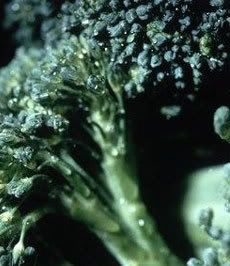
Broccoli: The Nutritious Warrior


Many nutritionists have dubbed broccoli a "SuperFood" - and with good reason. This tasty, versatile and nutrient-packed member of the cabbage family packs a strong anti-oxidant punch that can help fight many types of cancer, while also providing a hefty dose of calcium for strong bones and folic acid to prevent birth defects.
Broccoli contains the phytonutrients sulforaphane and indoles, which have been shown to effectively fight many types of cancer. Indole-3-carbinol has been found to deactivate an estrogen metabolite that promotes tumor cell growth, while increasing levels of a cancer protective form of estrogen called 2-hydroxyestrone. It also inhibits the movement of cancerous cells through the body.
Sulforaphane boosts detoxification enzymes to clear potentially carcinogenic substances from the body more quickly, while halting cell growth and increasing the self-destruct mechanism in abnormal cells. New research has shown that this phytonutrient can help repair sun damaged skin as well.
When broccoli is cut, chewed or digested, it releases glucose along with compounds that help to break down food, including isothiocyanates, which stimulate enzymes in the liver that detoxify carcinogens. One form of isothiocyanates, known as allyl isothicyanate, inhibits cell division while encouraging the self-destruct function in abnormal cells. These characteristics make regular consumption of broccoli a tasty way to reduce your risk of many types of cancer, including breast, prostate, colorectal and lung.
Broccoli is especially good to consume during pregnancy. It is packed with nutrients and an excellent source of calcium (74 mg per cup), vitamins C (124 mg per cup) K, and A, folate (94 mcg per cup) and fiber. The high calcium content helps to build and maintain healthy bones for your baby and you, while the folic acid helps prevent spina bifida and other birth defects, and the fiber content helps relieve constipation. Broccoli's high beta-carotene content helps fortify your immune system and promotes clear skin. Broccoli is also a good source of phosphorus, magnesium, potassium, and vitamins E and B6.
It is estimated that about 50 percent of Americans are infected with a bacterium known as H. pylori, which can cause ulcers and damage DNA. Eating broccoli sprouts has been found to suppress this potentially deadly bacterium and relieve the gastritis associated with it. Broccoli sprouts also provide 10-100 times the sulfur-containing phytonutrients as mature broccoli to detoxify carcinogens and boost enzymes.

Friday, April 4, 2008

Focus Your Energy


Sit in a comfortable position and begin breathing deeply. Relax and slow your breath. Breathe as if you are right next to a tree branch that can not be swayed by your breathing.
Close your eyes and put your hands out in front of you. Feel each hand and notice the life force that pumps through them.
Continue breathing deeply but breathe as if you are breathing into just one of your hands. You will start to feel an increase in energy in the hand on which you focus.
If you have a certain place in your body that needs healing, try focusing your breath on that area, as if you are breathing with that body part. If you are feeling depressed, try focusing your breath on positive thoughts. For example, if you are feeling down about your appearance or something you've done, try focusing on what is beautiful about your appearance or something good you've done by breathing into those thoughts.
Lastly, focus your breath on your unborn baby. Breathe into your womb, giving your baby rich oxygen and life force.
Take your time breathing into places that need healing or more life force. When you are finished, slowly open your eyes and return to the outside world.

Friday, March 28, 2008

The Great Outdoors


Spending time outdoors is a cherished tradition for many people, while others avoid the outdoors due to allergies, phobias, a lack of access or just a lack of interest. So many of us are surrounded every day by man-made technology designed to simplify our lives - such as cars, computers, and cell phones - but which can ultimately increase the pace of life, leaving us harried, stressed and sick. Sometimes we lose track of the peace and happiness that can be achieved just by taking a walk in the park or spending a day at the beach.
The psychological and physical affects of looking at or being near nature are more profound than most people realize. Studies have found that nature scenes help students perform better on tests, relieve anxiety in patients recovering from open heart surgery, help patients recover faster after gall bladder surgery, and reduce headaches and sickness in prison inmates. It's also been shown that spending time outside lessens fatigue in breast cancer patients and reduces outbursts from Alzheimer patients. And a recent study at the University of Illinois revealed that playing outdoors, particularly in lush green areas, can reduce symptoms of ADHD in children.
Sunlight is important for the production of serotonin in the brain, as well as for the production of vitamin D. The cells that make up our skin are built much like solar panels in the way they convert sunlight to the vitamin D necessary to maintain calcium levels in our blood and ensure strong bone structure. Vitamin D can also reduce the risk of certain types of cancers, type 2 diabetes, heart disease, hypertension, and osteoporosis. Although many foods contain vitamin D and many others are fortified with vitamin D, it is not as readily and safely absorbed by our bodies as the vitamin D that comes from pure sunlight. Approximately 80 percent of our daily vitamin D requirement is met through direct sunlight. However, 42 percent of African Americans between the ages of 15 and 29 and 36 percent of Caucasians ages 18 to 29 are vitamin D deficient. A vitamin D deficiency increases the risk of developing hyperparathyroidism, type 1 diabetes, hypertension, certain cancers and heart failure. Spending a few minutes outside a few times a week can ensure you get enough vitamin D, and any excess vitamin D is stored by your body for several weeks.
Spending time outdoors can be especially beneficial during pregnancy. The vitamin D you get from the sun helps promote fetal bone growth and reduce maternal bone loss during pregnancy, while the vitamin D found in breast milk is necessary for your child's skeletal and mental development. Walking near a body of water or taking a stroll in the woods can lower your blood pressure and improve your mood, which can help you relax and have a more comfortable pregnancy.
If you can't easily access a natural area or if you simply don't enjoy being in the great outdoors, you can purchase many items to help you bring a bit of nature inside your home. CDs featuring the roar of the ocean or birds singing in the forest can help you relax, while natural loofahs, mud masks, salt scrubs, seaweed wraps, light machines and natural light bulbs imitate some of the relaxing and healing qualities of the outdoors.

Friday, March 21, 2008

Hypnosis


Many Eastern religions and cultures use deep meditation as a form of self-hypnosis to attain enlightenment and serenity. This method of relaxation and focus has also helped many women to remain in control and calm during childbirth, thereby decreasing their pain and speeding their labor.
There is a significant difference between an entertaining hypnotist and a medical hypnotherapist. Hypnosis is intense, focused concentration with partial or complete unawareness of peripheral activity. Entertainment-quality hypnosis depends greatly on a person's openness to peer pressure and suggestion. A hypnotherapist, on the other hand, develops a relationship with a person in order to deepen their hypnosis practice and truly help the individual tap into their unconscious for therapeutic purposes.
Self-hypnosis is very similar to meditation. Both require practice to effectively master and they both increase alpha brain waves, which promote relaxation. The primary difference between the two is that the individual usually counts down into and out of the state of hypnosis. Self-hypnosis can be a powerful tool if used properly. However, some people may have a hard time letting go and losing control. In these cases, a trained hypnotist may be necessary to reach a hypnotized state.
Hypnosis has been shown to help people quit smoking, alleviate pain, minimize anxiety and nausea, promote relaxation, and to interrupt an intense emotional state. Contrary to popular belief, a state of hypnosis is not a state of unawareness or sleep. If you've ever been engrossed in a good book to such a degree that you are completely unaware of your surroundings, then you have been in a state of hypnosis. Nothing can be done to you without your consent, it is simply a shutting down of your conscious mind in order to tap into your unconscious or subconscious.
The first step in practicing self-hypnosis for labor begins before labor ever begins. It requires you let go of the common perception that childbirth is the most painful process a woman ever experiences. The idea - the reality - that should be implanted in your mind is that labor and delivery is perfectly natural and that your body is designed to release hormones to reduce pain. A confident and relaxed approach to childbirth can result in an empowering and beautiful experience.
Many women who have used hypnosis during labor claim to have a "pain free" experience. This is not a guarantee but an absolute possibility. In order for you to recognize the sensation of pain, your brain has to process it. During hypnosis, the brain is able to identify a painful sensation and choose not to register it as a threat or something that needs alleviating. This can actually reduce or block the painful sensation. It also allows you to relax instead of tensing up in fear, which only results in more pain. The outcome truly depends on the individual.


Learn more:


Friday, March 14, 2008

Blue Light Breath


Sit in a comfortable position with your spine straight as an arrow. Close your eyes and begin breathing deeply.
Notice which nostril is most open and exhale as if only through that nostril. Imagine a blue-white light flowing in that nostril and reaching the point between your eyebrows. Exhale the same blue-white light out the most open nostril.
Now shift the breath to the other nostril. Imagine a blue-white light as you exhale, focusing on the more closed nostril. Inhale the blue-white light to the point between your eyebrows and out from that point again. Repeat the process until both nostrils are fully open.
Next, focus on breathing in the blue-white light through one nostril, to the point between the eyebrows, and out the other nostril. Then switch on the inhale, breathing in through the one you've just breathed out and exhaling through the other.